“While we had it up, we found a few things.”
You came in for an oil change. Now there’s a man at the counter turning a sheet of paper around to face you. Brake flush. Fuel system service. Two filters. A belt that’s “starting to crack.” The number at the bottom makes your stomach drop.
He’s pleasant about it. He says he wouldn’t let his own mother drive it like this. There are people waiting behind you.
I’ve run my own repair garage for forty years, and I can tell you what happens next. Most folks pay. They’re polite, they were raised not to argue with a professional, and nobody ever taught them the three or four questions that change that whole conversation.
Some of that list may be real. Usually one or two lines are. You don’t need to become a mechanic to find out which. You need to know what to ask.
Here are two of them. They’re yours to keep.
Say this when they tell you what it needs
“Can you show me?”
A mechanic who found a real problem is proud to show you the worn part. One who didn’t will change the subject.
Say this when the list is long
“Which of these is a safety problem today, and which can wait?”
Now the list has to be sorted in front of you, and you only pay for what can’t wait.
The playbook has seven of these for the repair counter and six more for the car lot, each one word for word. Read them right off the page if you like. The good shops will respect you for it.
What’s in the 63 pages
The Counter Playbook
Five rules, the seven sentences, how to read an estimate line by line, and ten services that get sold far more often than they’re needed, with the one question to ask about each.
The Used-Car Walkaround
A 15-minute inspection checklist, the cold-start test a seller hopes you’ll skip, the walk-away list, and what to say in the finance office.
Ten Driveway Checks
No tools and no experience. Ten minutes a month that catch trouble while it’s still a small bill, plus charts for leaks, sounds and smells.
Tires
Where your car’s real pressure number is printed, why the number on the tire isn’t it, and how to read a tire’s age off the sidewall.
Warning Lights Decoded
Which lights mean pull over now, which mean book a visit this week, and what to do in the first sixty seconds.
Keep It Running
A plain maintenance schedule with a column for your own car’s numbers, and why light driving is harder on a car than most people think.
It also covers the other side: eight repairs you should never put off, and how to find an honest shop you can keep for life. I’ve seen more cars ruined by a repair somebody skipped than by one somebody was oversold.
Look inside
These are real pages from the book. Tap any page to see it larger.
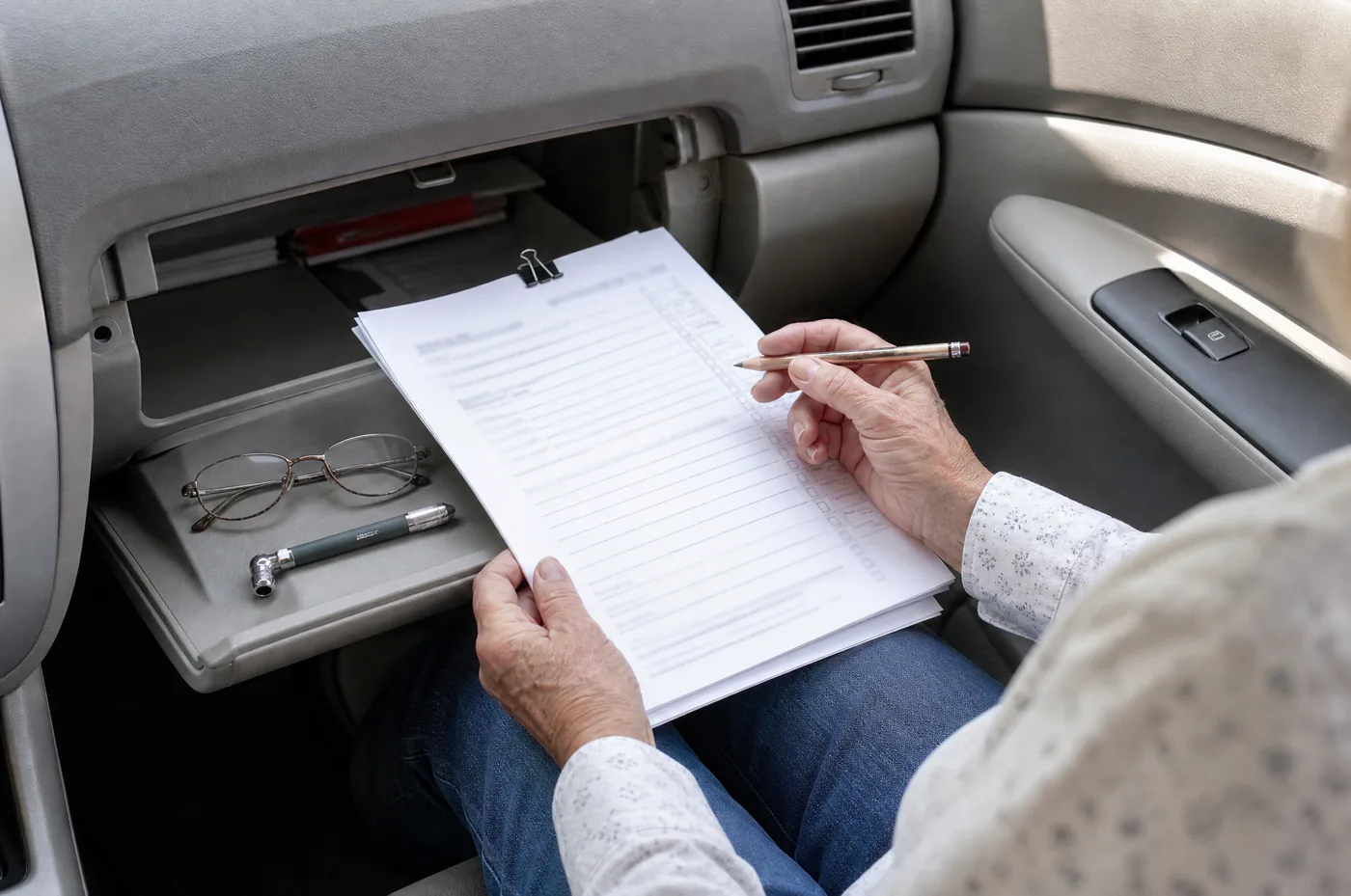
Nine pages that live in your glovebox
The back of the book is a set of fill-in sheets. Print them as often as you like.
- My Car’s Facts. Oil type, tire pressures, belt or chain. Ten minutes to fill in.
- The counter card. All the sentences on one page you cut out and keep with your insurance card.
- Before I say yes. Sort any shop’s list into now, soon and watch.
- Quote comparison for getting a second price on a big job.
- Service log and a monthly ten-minute check.
- Used-car scorecard, a roadside card, and a page of questions for my mechanic.

Where this comes from
Before the garage was mine it belonged to a man named Gus, and Gus kept a notebook. He didn’t write torque specs in it. He wrote down what customers said when they were about to get talked into something, and what they should have said instead.
“Fix what’s broke. Tell the truth about what isn’t. It’s her money and it’s her car.”
I’ve been adding to that notebook for forty years. This book is that notebook, cleaned up so you can read my handwriting.
Most mechanics are decent people doing hard work, and the book says so. It isn’t written to make you suspicious of everybody. It’s written so you can tell the difference.
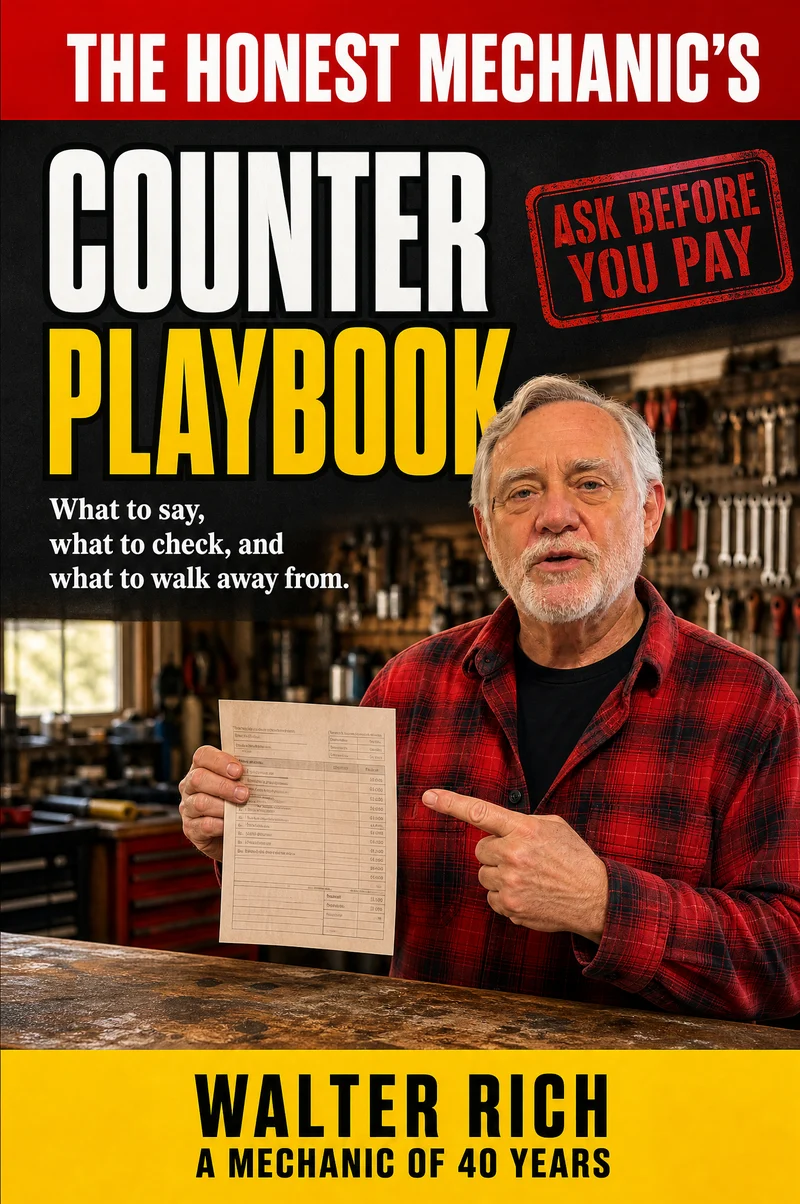
The Honest Mechanic’s Counter Playbook
- 63 pages in large, easy-to-read type
- 13 word-for-word scripts for the repair counter and the car lot
- Ten repairs to question, and eight you should never put off
- Used-car walkaround, ten driveway checks, tire and warning-light guides
- Nine printable glovebox pages
$9 one payment
Get the PlaybookYou’ll receive the PDF by email at the address you pay with. It costs less than many shops charge to change a cabin air filter.
Questions people ask
Is this a printed book?
No. It’s a PDF file you download. You can read it on a phone, tablet or computer, and you can print all of it or just the glovebox pages on any home printer.
How do I get it after I pay?
It’s sent to the email address you use at checkout. If you don’t see it, look in your spam or promotions folder.
I don’t know anything about cars. Will I follow it?
That’s who I wrote it for. Nothing in it asks you to pick up a wrench. The checks need a rag, a penny and a tire gauge that costs a few dollars.
Will it work for my car?
The scripts and checklists apply to any gasoline car or truck. Wherever a number depends on the vehicle, the book shows you where to find your own in the owner’s manual or on the door sticker, and gives you a place to write it down.
Is this the same as your videos?
The videos explain one topic at a time. The book puts the scripts, checklists and worksheets in one place you can carry to the counter, and adds the fill-in pages.
Is it a subscription?
No. You pay once and the file is yours.